March 12, 2026
An Enid spray foam contractor explains the real difference — and why "just use closed cell everywhere" is the wrong answer
This is probably the most common question I get from homeowners: "What's the difference between open cell and closed cell, and which one do I need?"
And right behind that: "Isn't closed cell just... better?"
Short answer — no. They're different tools for different jobs. And picking the right one (or using both) is the difference between a home that performs well for decades and one that has problems down the road.
I'm Cory Boehs, owner of Kool Foam LLC in Enid, Oklahoma. I've been spraying foam for over 18 years, and I've seen what happens when the wrong foam goes in the wrong place. Let me break this down the way I'd explain it if we were standing in your attic.
The Basics
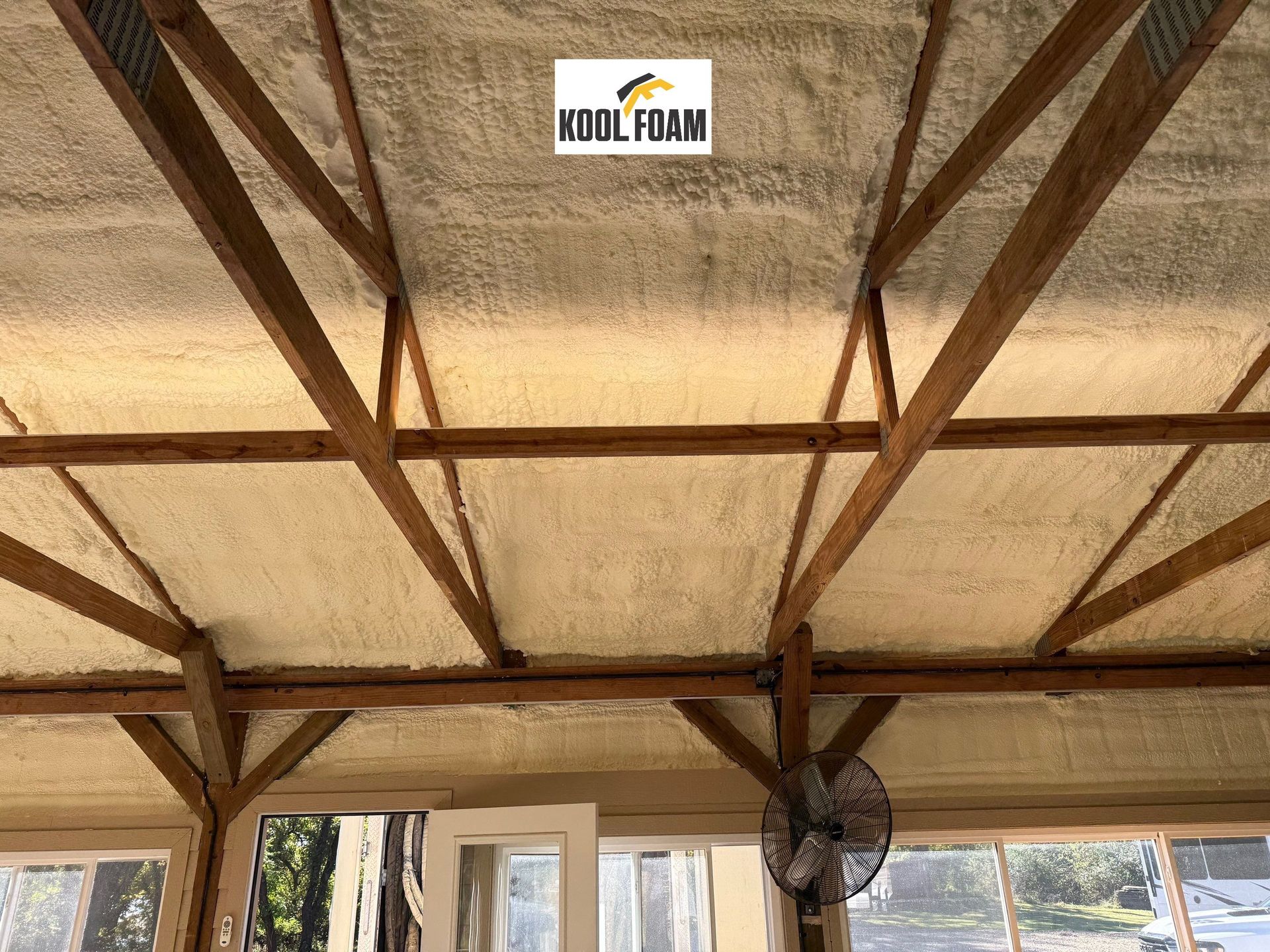
Open cell spray foam expands a lot when it's applied — it puffs up to fill cavities completely. It's softer, lighter, and has an R-value of about R-3.5 to R-3.8 per inch. It's great at air sealing and it's excellent at soundproofing. It's also the more affordable option, running about $1.60 to $3.00 per square foot installed.
Closed cell spray foam is denser and more rigid. It packs an R-value of about R-6 to R-7 per inch — nearly double the insulating power in the same thickness. It also acts as a vapor barrier and adds structural strength to whatever it's sprayed against. It runs about $2.20 to $5.00 per square foot installed.
Both are spray foam. Both air seal. Both outperform fiberglass and blown-in by a mile. But they behave differently, and that matters.
When We Use Open Cell
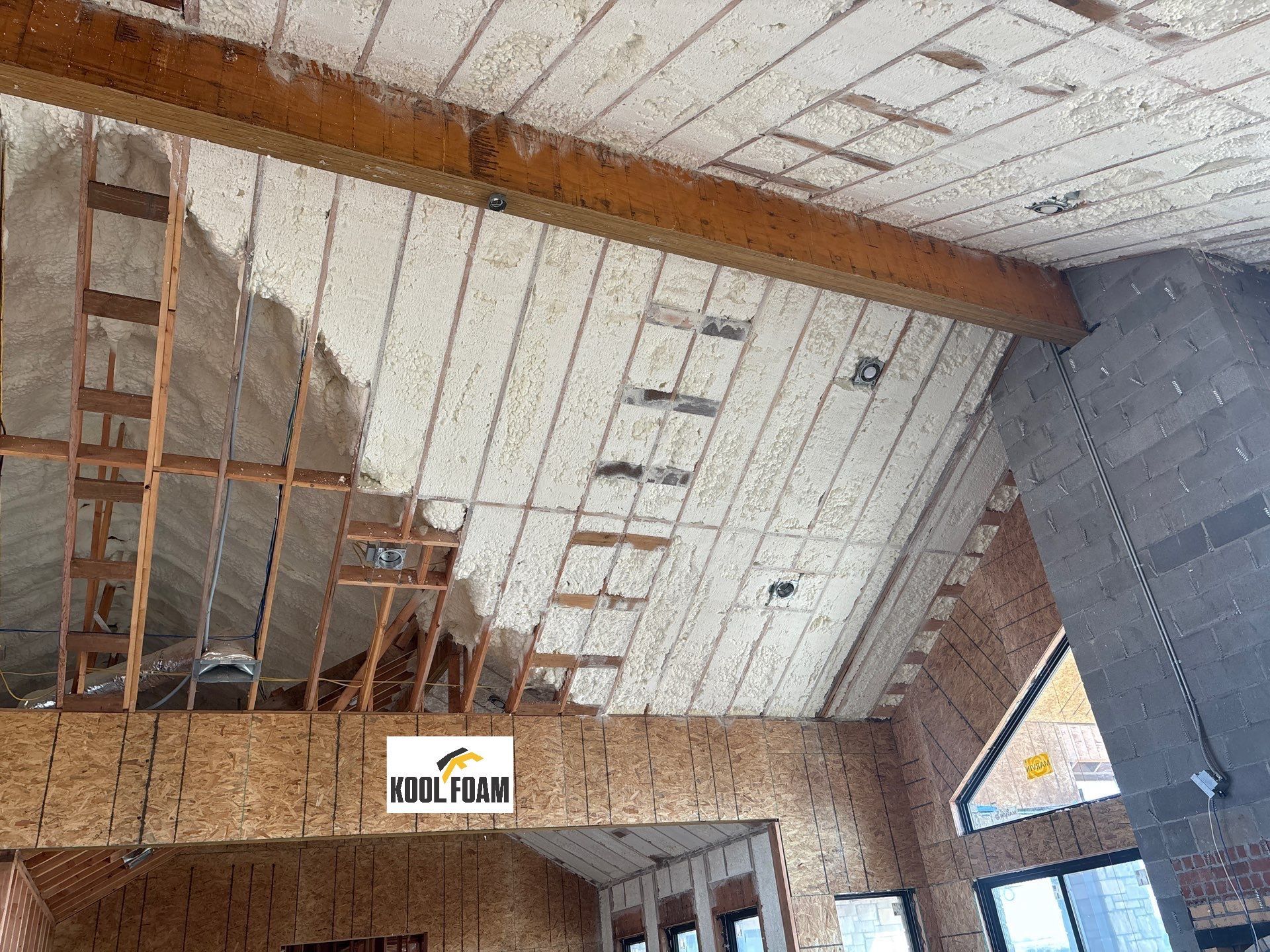
Open cell is our go-to for wood-framed structures and wood substrates. Think stick-built homes, attic rooflines, interior walls, and wood-framed additions.
Here's why it works so well in those applications. Open cell expands to fill every gap, crack, and crevice in a wood-framed cavity. It moves with the structure as wood naturally expands and contracts with temperature and humidity changes. And because it's softer, it doesn't put stress on framing members.
The soundproofing is a big deal too. Open cell absorbs sound significantly better than closed cell. If you've got a media room, a home office, or bedrooms above a garage, open cell makes a noticeable difference in how quiet those spaces are.
It also lets moisture pass through it rather than trapping it, which is important in wood structures. Wood needs to be able to dry in both directions. Open cell lets that happen while still providing a solid air barrier.
Where open cell shines in Oklahoma:
- Attic rooflines in stick-built homes
- Interior walls (especially for sound control)
- Wood-framed additions and bonus rooms
- Second floors above garages
When We Use Closed Cell
Closed cell is what we reach for when we're spraying against metal substrates or in crawl spaces.
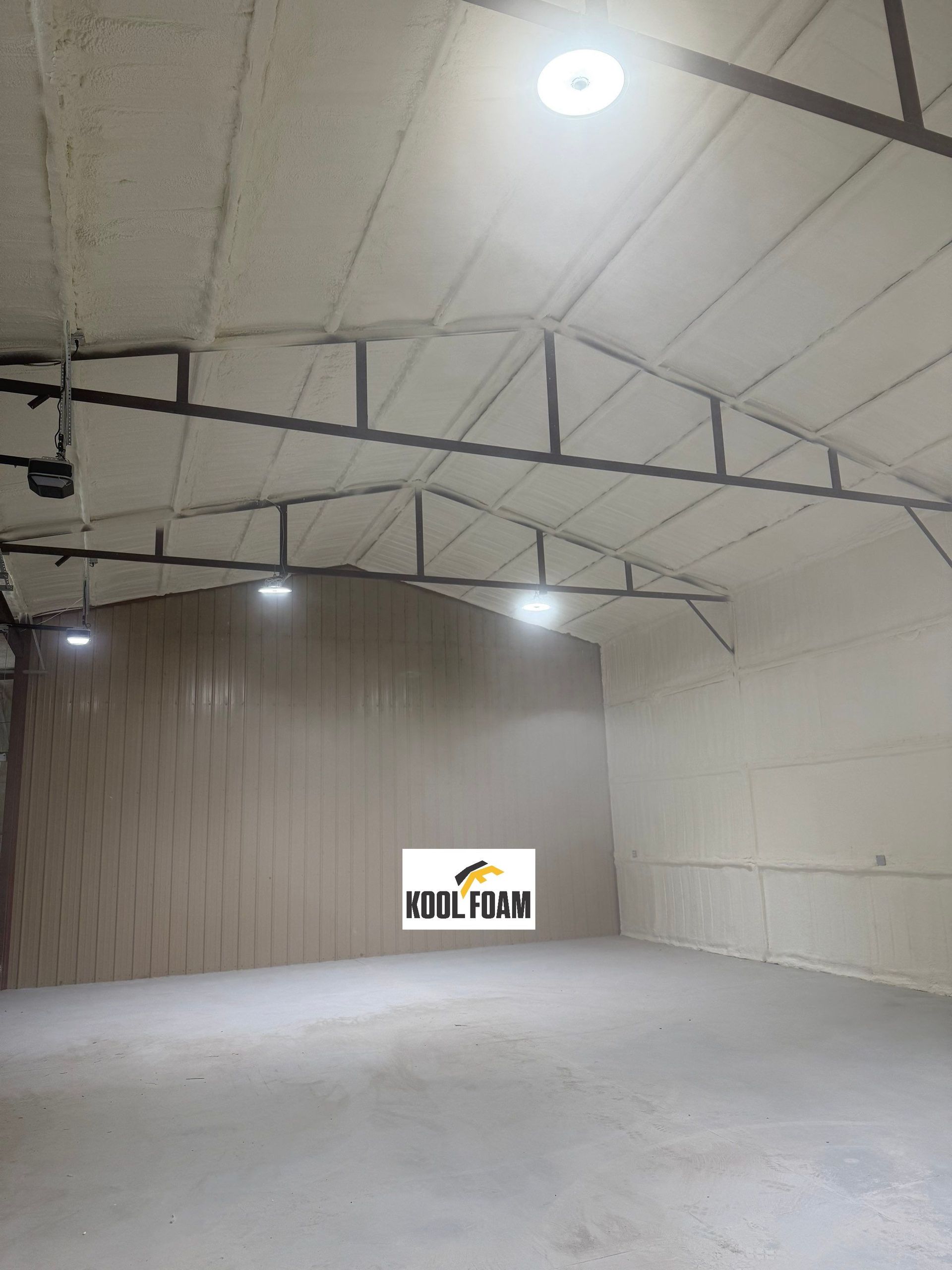
Metal buildings, metal roofs, pole barns, and steel-framed shops — closed cell is the right call here. Metal sweats. When warm, humid Oklahoma air hits a cold metal surface, you get condensation. Closed cell acts as a vapor barrier, preventing that moisture from reaching the metal and causing corrosion, rust, and eventually mold.
Crawl spaces are the same story. You've got ground moisture, potential flooding, and humidity coming up from below. Closed cell seals that space off and keeps moisture where it belongs — outside your building envelope.
The higher R-value per inch also matters in spaces where you don't have a lot of depth to work with. In a crawl space or against metal purlins, you might only have 2 to 3 inches to work with. Closed cell gives you R-12 to R-21 in that thickness. Open cell in the same space would give you R-7 to R-11. That's a meaningful difference when you're tight on space.
Where closed cell shines in Oklahoma:
- Metal buildings, shops, and pole barns
- Crawl spaces
- Metal roofing systems
- Any application where moisture drive is a concern
- Tight spaces where you need maximum R-value in minimal thickness
The Hybrid Approach: Why It's Our Most Popular System for Barndominiums
Here's where it gets interesting. On barndominiums — which are huge here in Oklahoma — we often use both types of foam in the same building.
The exterior metal walls and roof get closed cell to handle the vapor barrier and prevent condensation against the metal. Then the interior wood-framed partition walls get open cell for sound control between rooms.
This hybrid system is honestly one of our most popular setups. Barndominium owners love it because they get the moisture protection they need on the metal shell AND the sound dampening between living spaces. Nobody wants to hear the TV in the living room from the master bedroom, and nobody wants condensation dripping inside their metal walls.
It's the best of both worlds, and it's a perfect example of why "which foam is better" is the wrong question. The right question is "which foam goes where."
The Misconception I Hear the Most
"Just spray closed cell everywhere — it's the better product."
I hear this all the time. And I get why people think that. Closed cell has a higher R-value, it's a vapor barrier, it adds structural strength. On paper, it sounds like the obvious winner.
But here's the thing — open cell is an amazing insulation when it's used in the right applications, knowing its limitations.
If you spray closed cell in a wood-framed attic where open cell would do the job, you're spending significantly more money for benefits you may not need in that location. You're also creating a vapor barrier on the interior side of your wall assembly that could actually trap moisture in certain situations — the opposite of what you want.
Open cell's ability to let moisture vapor pass through is actually an advantage in wood-framed construction. Wood structures need to breathe. Sealing them up with closed cell on both sides can create moisture problems over time, especially in Oklahoma's humidity.
The key is understanding vapor drive — which direction moisture wants to move through your building envelope based on temperature and humidity differences. A good spray foam contractor understands this and specs the right foam for each part of your home. A contractor who just sprays closed cell everywhere either doesn't understand building science or is trying to upsell you.
Quick Comparison
Open Cell:
- R-value: ~R-3.5 to R-3.8 per inch
- Cost: $1.60 - $3.00/sq ft
- Vapor barrier: No (vapor permeable)
- Sound control: Excellent
- Best for: Wood structures, attics, interior walls
- Typical thickness: 3" to 5.5"
Closed Cell:
- R-value: ~R-6 to R-7 per inch
- Cost: $2.20 - $5.00/sq ft
- Vapor barrier: Yes
- Sound control: Good
- Best for: Metal buildings, crawl spaces, moisture-prone areas
- Typical thickness: 2" to 3"
How to Know What Your Home Needs
The honest answer is: it depends on your specific building. What's the structure made of? What substrates are we spraying against? Where are your moisture concerns? What's your budget? Do you have sound control needs?
That's why a proper assessment matters more than a generic recommendation. When we come out for a quote, we look at your building envelope as a whole system — not just "what kind of foam do you want." We'll tell you exactly what we'd recommend for each area and why.
And if someone tells you it's closed cell everywhere or nothing — get a second opinion.
Get the Right Foam in the Right Place
At Kool Foam, we've been helping Oklahoma homeowners and builders make the right insulation decisions for over 18 years. We're SPFA-certified, fully insured, and we'll have a quote back to you within 24 hours.
Whether it's open cell, closed cell, or a hybrid system for your barndo — we'll make sure the right product goes in the right place.
Call us at (580) 264-2846 or fill out the form on our website to set up your free estimate.
Kool Foam LLC — Enid, Oklahoma — Serving all of North Central Oklahoma