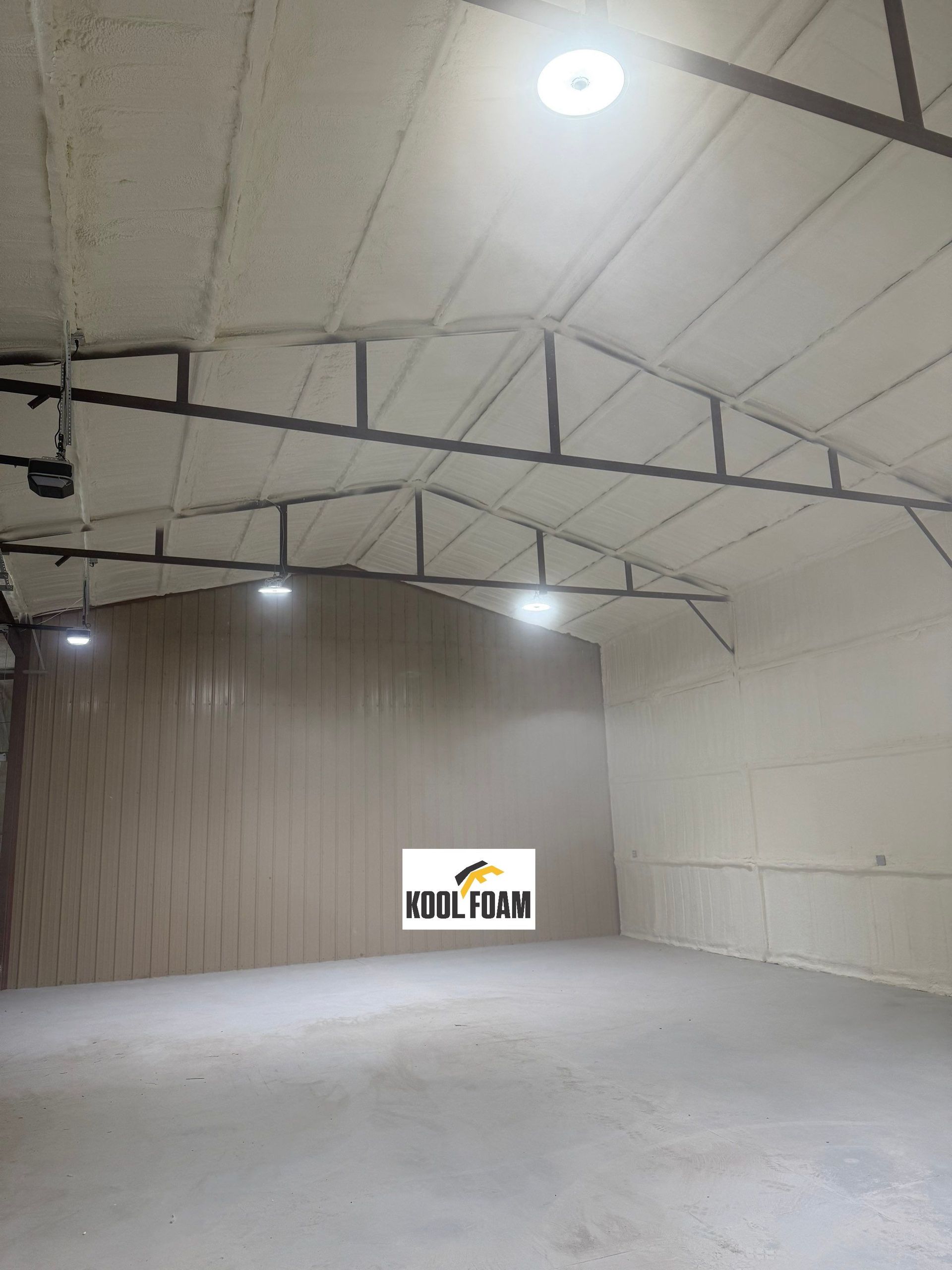
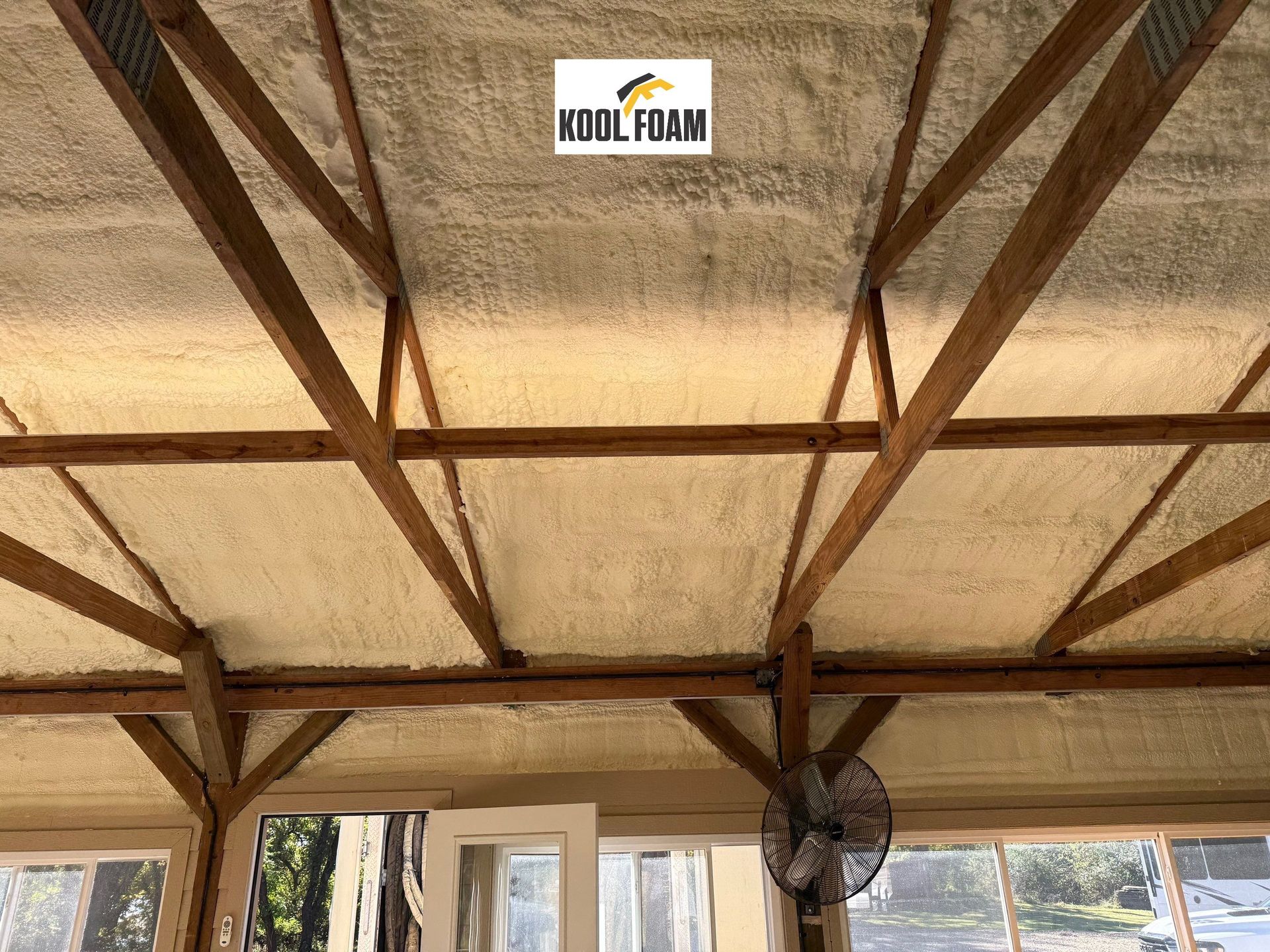
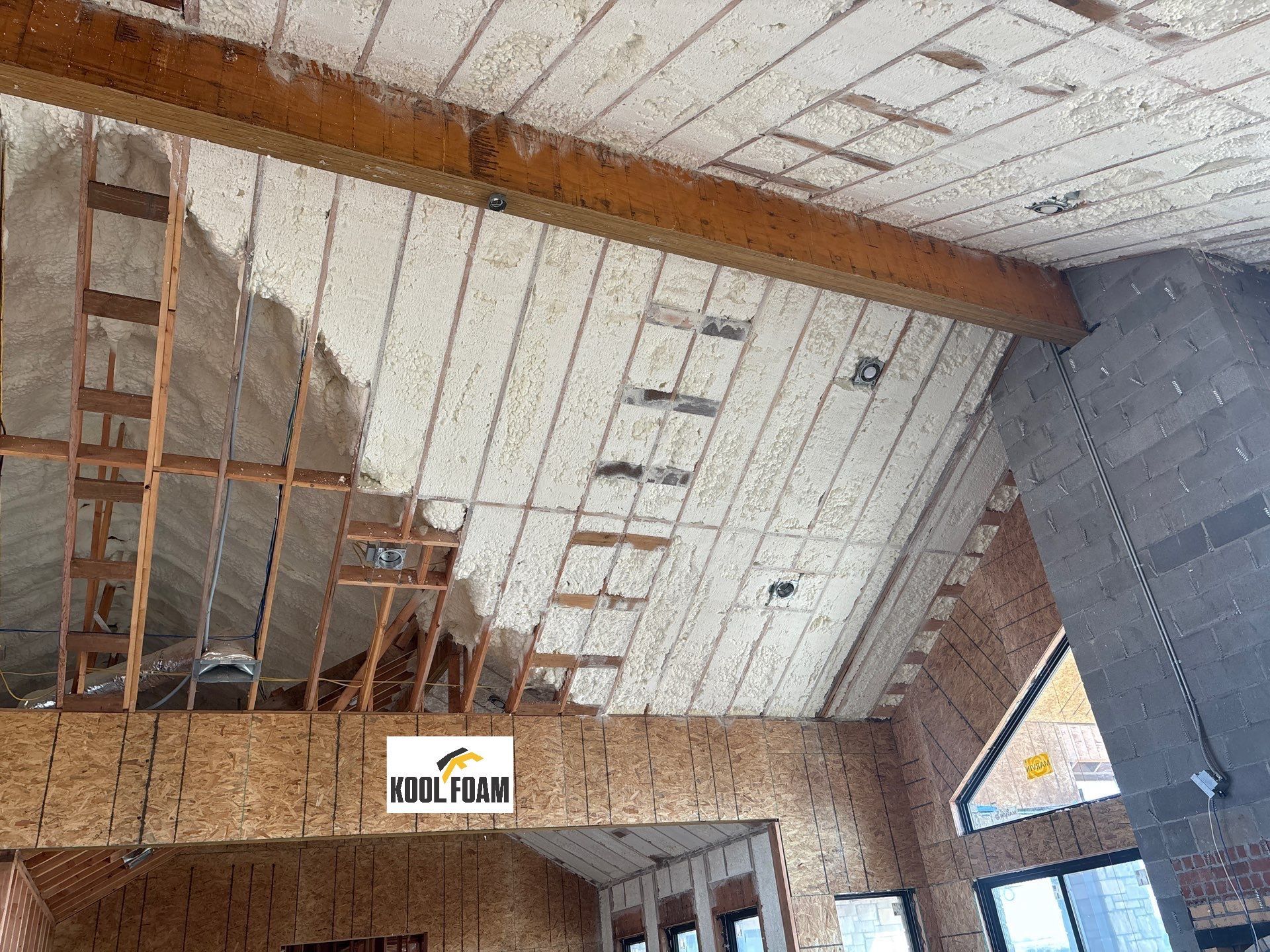
Before we get into this, let’s be clear: there are two types of spray foam insulation — open cell and closed cell — and both have their place. Open cell is a great product. We spray it all the time. There are applications where it’s exactly the right call, and we’ll get to that.
This post is specifically about closed cell foam — or more accurately, about what gets sold as closed cell foam that isn’t quite what you think you’re paying for.
The difference that actually matters.
True closed cell spray foam is a two-pound-per-cubic-foot product. That means ninety percent of the cells in the foam are closed, with gas trapped inside. That’s what gives it the high R-value, the structural rigidity, and — critically — the ability to act as a vapor retarder at just an inch and a half thick.
There are also foams on the market at 1.6, 1.7, and 1.8 pounds per cubic foot. Standing next to each other in your wall, you could not tell the difference. They look identical. Same color. Same texture. Same basic appearance. But they’re not the same product.
The lower-density foams have more open cells. The R-value is lower. And here’s the one that really matters: to achieve vapor retarder performance, you’d need three to four inches of the cheaper product to get what two inches of true two-pound foam gives you. Most contractors who use it don’t tell you that. Most customers never find out — until they have a moisture problem years down the road.
Why would a contractor use it?
Cost. The lower-density products are cheaper to buy and easier to spray. If a contractor is competing on price, this is one of the places the margin gets made up. And because the products are visually identical, there’s no way for a homeowner to know what was sprayed after the fact without a core sample and a lab test.
We’ve been doing this for 18 years. We’ve seen the callbacks. We know what happens when the wrong product goes in the wrong application. We spray true two-pound closed cell foam — period. Not because we have to. Because we’d rather sleep at night.
So when is open cell the right call?
Open cell foam is a half-pound product — soft, flexible, and excellent at filling cavities and sealing air. It’s typically the right choice for interior applications like attic rafters in conditioned spaces, interior walls where sound control matters, and situations where you need deep fill at a lower cost per square foot. It breathes more than closed cell, which in the right application is actually an advantage.
The key is matching the product to the application. A good contractor knows the difference and will tell you which one is right for your project — not just which one is cheaper to spray.
What you can do.
Before you sign anything, ask your contractor two questions: What is the pound-per-cubic-foot density of the closed cell foam you’re using? And can you show me the product data sheet?
A contractor who knows their product will answer without hesitating. A contractor who doesn’t — or who gets defensive — is telling you something.
You’re making a long-term decision about your home or building. The foam going in today will still be there in 25 years. Make sure it’s the right product.
Draft generated March 12, 2026 | Kool Foam LLC